Disclosure: This post contains affiliate links. If you buy through a link on this page, we may earn a small commission at no extra cost to you.
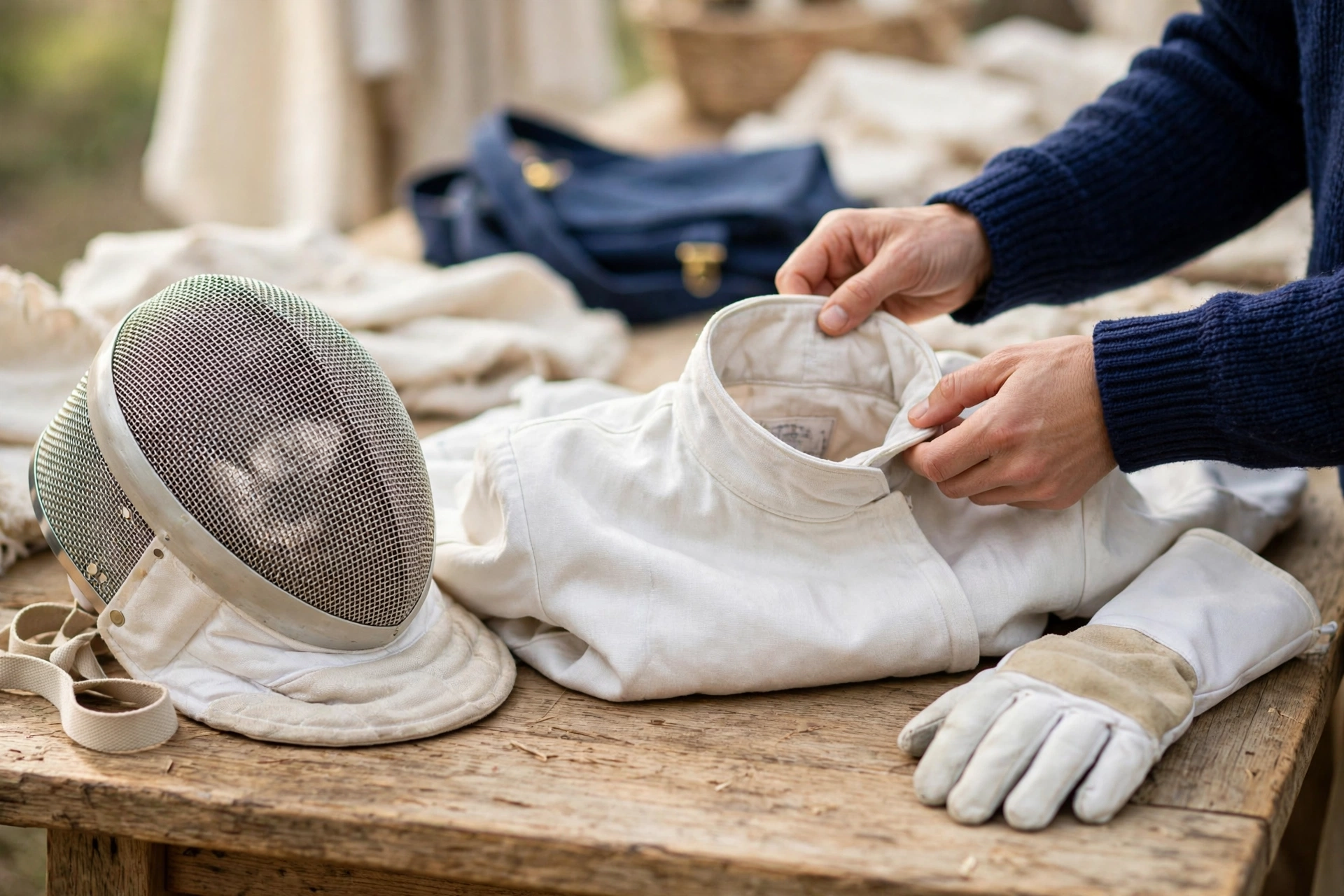
Fencing kids outgrow gear fast, which means the used market is full of barely-worn jackets, bags, and knickers from families whose child grew two sizes in a year — or quit. Some of those listings are genuine bargains. Others are safety equipment with an invisible history, and the discount isn’t worth what you’re actually buying. This guide sorts gear into three piles: smart used buys, buy-with-caution, and never buy used.
Smart Used Buys
Equipment bags. A bag has no safety job. Zippers, wheels, and straps are all visible and testable, and a new bag costs about $40–80 — so a used one in good shape is the safest money in fencing. Check price on Amazon
Jackets, knickers, and underarm protectors (non-electric clothing). This is where the used market shines. Kids outgrow uniforms long before they wear them out, so lightly used 350N clothing is everywhere. The wear is on the surface where you can see it, and a wash handles the hygiene side. A new 350N jacket costs about $89, so a clean used one at a clearly lower price is a sensible buy — with the inspection steps below.
Body cords and mask cords. Cheap to begin with (a new body cord is about $15–35), easy to test on a club scoring box, and usually easy to repair if a plug loosens. If a used cord tests clean and the plugs look solid, it’s low risk.
Practice (dry) weapons and spare parts. A dry practice weapon for home target work, or used guards, grips, and pommels bought as parts, are fine. Complete electric weapons are a different story — see the caution pile.
Buy With Caution
Complete electric weapons. Every bend a blade takes weakens the metal a little, and there’s no way to see how many bends are left in it. A complete used weapon makes sense only when you know the seller, it’s relatively new and lightly used, and the price reflects that it might not last the season. From a stranger, assume it’s being sold because it’s near the end of its life.
Lamé (foil and saber). Lamés fail quietly. Sweat salts and oxidation corrode the metallic threads, producing dead spots — areas that stop registering touches — and a lamé stored folded for two years can develop new dead spots soon after you buy it, even if it tests fine today. A brand-new lamé costs about $78, which caps how much a used one can save you. Buy used only from a trusted seller, test the whole surface (below), and treat it as a backup, not a main lamé. Check price on Amazon
Gloves. A new glove is about $20–26, a hole in the palm or fingers means it can’t be used in competition, and gloves are the most personal, sweat-soaked item in the bag. The saving over new is a few dollars — most families should just buy new.
Fencing shoes. Soles wear smooth in ways photos hide, and grip is the whole point of fencing shoes. Only consider used shoes you can inspect in person, with tread that still feels sharp.
Never Buy Used
Masks. This is the one firm rule. A mask is the safety device between a blade and your child’s face, and its strength depends on its history: every hard impact the mesh has taken, every season of sweat and corrosion, weakens it in ways you cannot see. A used mask may no longer pass the punch test used at equipment check, and you have no way to know what it has been through. A new beginner mask costs about $72–94 — the gap to a used one is the worst money-saving trade in the sport. Check price on Amazon
Blades for competition. Same logic as the mask, on a smaller budget line. Metal fatigue is invisible: a blade that has been bent back straight fifty times looks identical to a new one and can snap in the next bout. Broken blades are how fencing injuries happen. Buy blades new, and when your own blade starts taking a permanent bend easily, retire it.
Anything with no rating label. If the Newton rating label is missing, unreadable, or was never there — mask, jacket, plastron, anything — it doesn’t matter how cheap it is. Unrated gear can’t be checked, can’t be trusted, and may not be allowed at events.
Where to Buy Used
- Inside your club. Bulletin boards, club swap days, and other parents are the best source: you know the gear’s history, your child can try things on, and the coach has probably seen the item in use.
- At tournaments. Vendor tables occasionally sell used or clearance gear, and larger clubs run swap meets. You can inspect in person, which fixes the biggest problem with buying used.
- Online marketplaces (eBay, Facebook Marketplace, fencing forums). Works well for bags and clothing. Ask for clear photos of the rating label, seams, and any wear, plus the item’s age and how much it was used. There’s no try-on, so measure your child and compare against the brand’s own size chart — one brand’s “youth medium” is not another’s. For anything electric, you can’t test it until it arrives, so check the return policy before paying.
For any bigger purchase, ask your coach or the club armorer to look the item over before money changes hands. They spot in seconds what takes a parent an hour of guessing.
The Used-Gear Inspection Checklist
Clothing (jacket, knickers, plastron)
- Find the Newton rating label: 350N is the standard minimum for US club and youth fencing. No label, no buy.
- Try it on (or measure carefully) and check against the brand’s chart — not the seller’s description of the size.
- Check seams, zippers, and Velcro; look for thinning fabric, holes, and repairs, especially under the arms and at the crotch seams.
- Wash before first use. If a listing smells like it can’t be washed clean, walk away.
Lamé and cords
- Test a lamé on a scoring box or with a multimeter across the whole surface, not just one spot — dead spots hide at creases and under the arms. Greenish discoloration is oxidation, and it means conductivity loss is already underway.
- Test cords while flexing them along their length and wiggling the plugs; a cord that cuts out when it moves is a cord that fails mid-bout.
Weapons
- Look down the blade: kinks, rust, and bends that don’t spring back are all disqualifiers for anything beyond home practice.
- Check the tip: screws present, barrel tight, no wobble.
Masks (if you’re even looking at one)
- The minimum checks: the mesh should show no dents, rust, or broken wires; the bib should be intact with no tears; straps and elastic should still hold firmly; and it should pass a 12 kg punch test at your club before use.
- Our advice stays the same even if a used mask passes all of that: buy the mask new.
FAQ
Is a used mask okay if it looks new and passes a punch test?
It’s the least bad version of a bad idea. You still don’t know its impact history, the price gap to a new beginner mask is small, and this is the piece of gear where “probably fine” isn’t good enough. Buy new.
Can used clothing be used in competitions?
Yes, as long as it meets the event’s requirements and passes equipment check — clean, intact, correctly rated gear is legal whether new or second-hand. Inspectors judge condition, not age.
Our club lends gear. Should we buy used at all?
Borrow first, as with new gear. Used buying makes most sense once your child is committed and growing fast, and you want a spare set — a backup jacket or lamé — without paying new prices for items that live in the bag most of the time.
The Bottom Line
Buy the bag and the outgrown whites used, test anything electric before you trust it, and keep two items off the second-hand list no matter the discount: the mask and competition blades. Safety gear with an unknown history isn’t a bargain — it’s a gamble where someone else already took the best years out of the equipment.