Disclosure: This post contains affiliate links. If you buy through a link on this page, we may earn a small commission at no extra cost to you.
Every fencing family starts with the same transport system: a mask in one hand, a weapon in the other, and a jacket over one arm. It works until the first tournament, when your child needs a full kit, a spare weapon, and dry clothes — all day, across a venue the size of a warehouse. Fencing bags fall into three families, and the right one depends on how you actually get to fencing, not on how much gear you own.
The Three Types at a Glance
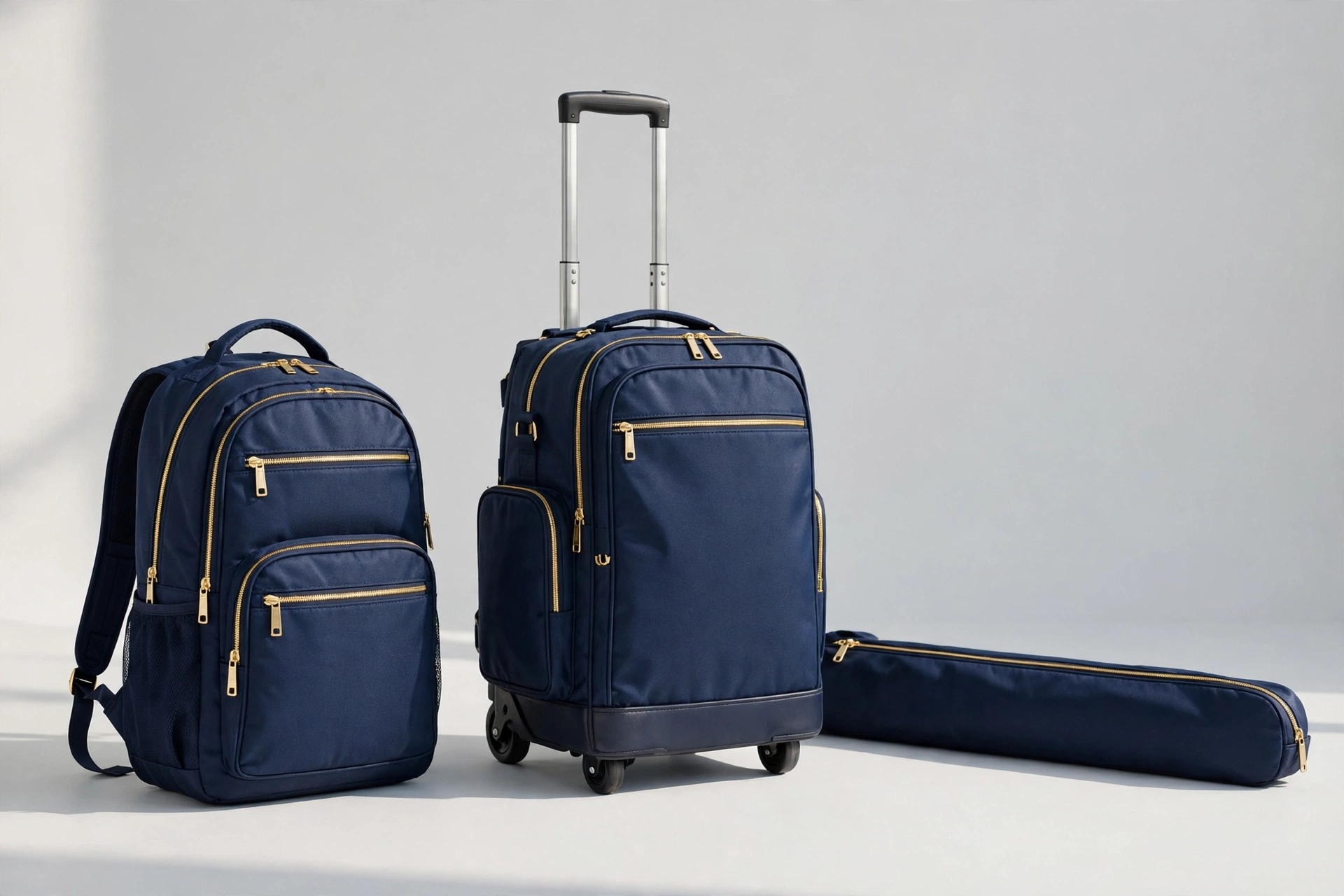
| Type | What it carries | Typical scene | Reference price (prices vary) | Weapon bag | 1–3 weapons only, sometimes a glove | A second bag alongside a regular duffel; keeping weapons separate | The cheapest option, usually well under a full kit bag | Backpack / shoulder bag | One full kit: mask, uniform, glove, 1–2 weapons | Daily practice, school bus, short walks | About $40–$80 | Roller / team bag | Full kit plus spares: 2+ weapons, second mask or lamé, tools, clothes | Drive-to tournaments, multi-day events, flying | About $100–$200; premium airline models $200 and up |
|---|
Reference prices checked in October 2026. A useful anchor: shoulder- and backpack-style fencing bags at US retailers generally run about $40–$80, and in starter sets the basic bag typically adds only about $35 over the same set without one — a full kit bag does not have to be expensive.
Start With Your Routine, Not Your Gear
Daily practice. If the bag goes from car to club door, a backpack or shoulder bag is enough for most kids. It holds one complete kit, keeps hands free, and fits in a school locker area or car footwell. This is the right first bag, and many fencers use one for years.
Driving to tournaments. Tournament day means more of everything: a spare weapon (weapons fail equipment check and break), a second body cord, tools, snacks, a change of clothes. That is roller-bag territory. Wheels matter less in the parking lot than inside the venue, where the walk from check-in to the strip can be long — and your child, not you, will be dragging the bag by the second event. Look for bags that stand upright on their own; a bag that flops over every time it is parked gets old fast.
Flying. Air travel changes the rules, so it gets its own section below.
What to Look For Inside
Gear organization is where cheap bags and good bags separate:
- A separate weapon compartment with sleeves or dividers. Weapons should lie flat and still, each in its own sleeve or separated by a divider, with straps to hold them. Loose weapons rub, tangle cords, and arrive with bent blades or chipped guards.
- A mask pocket or a mask-shaped space. The mask is the bulkiest item and the easiest to crush. Better bags give it its own compartment or a protected end of the main space.
- A ventilated or separate “wet” pocket. A sweaty uniform sealed in with body cords and a lamé is how gear starts to smell and cords start to corrode. A mesh or ventilated section for the uniform — or at least a separate pocket — is worth having.
- Small pockets for cords and tools. Body cords, mask cords, spare tips, a small screwdriver, and tape disappear into one big compartment. Zippered small pockets keep them findable between bouts.
- Lockable zippers and a name tag. At a tournament, hundreds of near-identical black bags line the walls. A bright tag or strap is the cheapest insurance against a mix-up, and lockable zips matter if the bag will ever be checked on a plane.
Flying With Fencing Gear: The Rules That Matter
Three principles cover almost every US trip:
- Weapons always fly checked. Under TSA rules, swords — explicitly including fencing foils — are prohibited in carry-on baggage and allowed in checked baggage, provided they are sheathed or securely wrapped so they cannot injure handlers. In practice: blades in individual covers or sleeves, tips protected, weapons secured so nothing pokes out. Allow a few extra minutes at check-in; agents occasionally want to look inside.
- Watch the size limit, not just the weight. Most US airlines set the standard checked-bag limit at 62 linear inches (length + width + height, about 157 cm). A full-size weapon is roughly 105–110 cm long all by itself, so many fencing bags exceed the standard box and can draw oversize or sporting-equipment fees, which vary by airline. Some travel bags are deliberately designed to stay within the ~158 cm total (Allstar’s Airline rollbag is one example). Before your first flight, check your airline’s sporting equipment page for its fencing policy and measure your bag — this is a five-minute check that prevents a surprise fee.
- Protect the blades, and consider splitting the load. Soft bags get stacked under other luggage. Individual blade covers or rigid tubes keep blades from bending and from damaging everything else, and airlines may limit their liability for sporting gear that is not in a hard-sided case — one more reason hard weapon cases exist. A common fencer’s trick: check the weapons in the sturdiest case you have, and carry the mask and uniform in the cabin, so a delayed bag does not mean a missed tournament.
Leon Paul team and roller bags (premium end). The Team Bag, Apex, and FreeRoller lines are the bags you see at national events — heavily compartmentalized, built to stand up and to survive baggage handling. Reference prices run $200 and up. Check price on Amazon
Absolute Fencing bags (the everyday range). Absolute’s shoulder, backpack, and Advanced bags cover the daily-practice and regional-tournament range, roughly $40–$105 depending on size and style. Check price on Amazon
FAQ
Can we just use a regular sports duffel?
At first, yes — if the weapons go in blade covers so nothing pokes through, and the mask is packed so it will not be crushed. The usual failure is length: a standard gym duffel is shorter than a full-size weapon, so guards end up jammed against the zipper.
Backpack or roller for a 10-year-old?
Backpack, unless they already fence full tournament days. A loaded roller bag is heavy on stairs and in crowds, and a child who cannot manage their own bag ends up handing it to you.
Do we need a separate weapon bag too?
Only if your main bag has no weapon compartment, or your fencer carries weapons to a second activity. A weapon bag plus a duffel is a flexible combo, but for most families one well-organized kit bag is simpler.
The Bottom Line
Match the bag to the trip you make most: backpack for daily practice, a roller once tournament days get long, and airline-aware choices — checked weapons, a bag within size limits, protected blades — before the first flight. Organization inside (weapon sleeves, a mask space, a wet pocket) matters more than brand, and it is what you will appreciate every single practice.